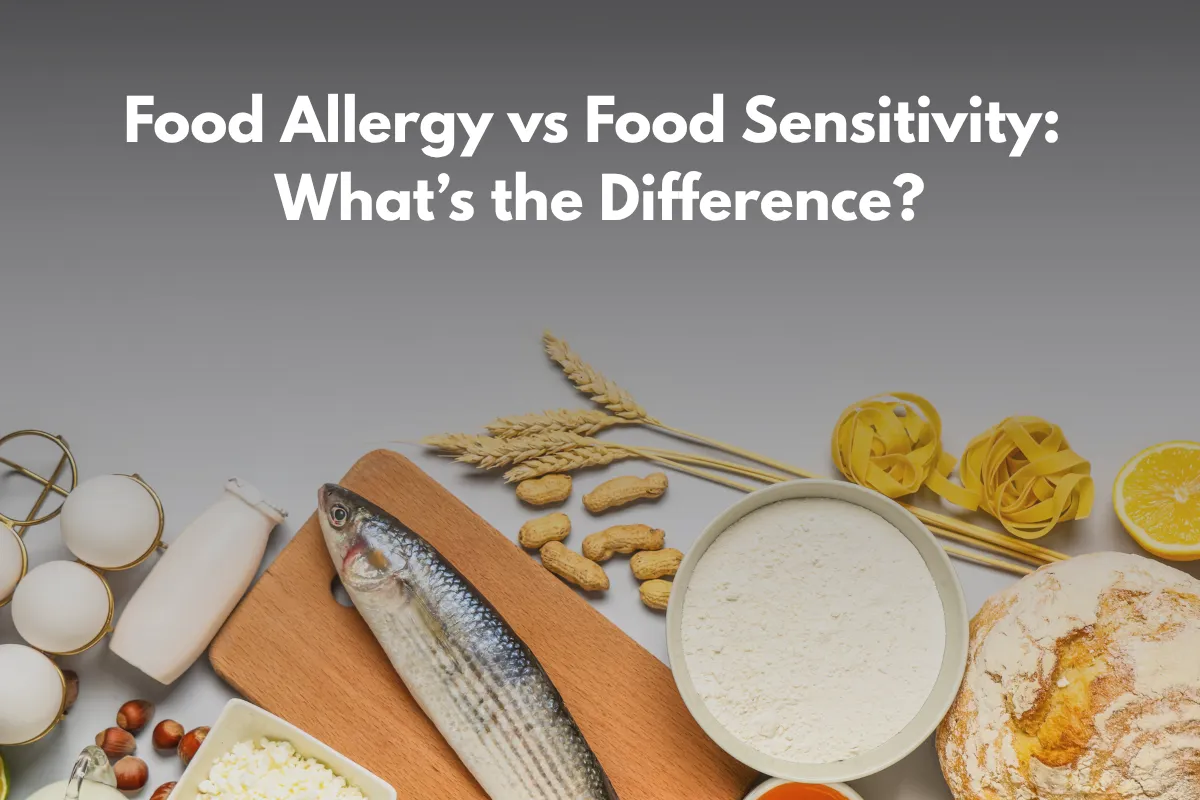
Food Allergy vs Food Sensitivity: What’s the Difference?
If you’ve ever wondered whether your child is dealing with a food allergy or a food sensitivity, you’re not alone.
These two terms get used interchangeably, but they are actually very different, and understanding that difference can completely change how you start making sense of your child’s symptoms.
What Is a Food Allergy?
A food allergy is the immune system’s immediate and often strong reaction to a specific food.
When a child with a food allergy eats a trigger food, the body reacts quickly because it sees that food as harmful.
This reaction usually happens within minutes to a couple of hours and can include symptoms like:
hives or skin rashes
swelling (lips, face, throat)
vomiting
wheezing or trouble breathing
👉 Food allergies are typically more obvious because the reaction is fast and more severe.
Because of this, allergies are often diagnosed earlier and require immediate avoidance of the trigger food.
What Is a Food Sensitivity?
Food sensitivities are different.
They are often a slower, delayed reaction that can show up hours or even days after eating a food.
Instead of an immediate immune response, the body reacts in a more subtle and less predictable way.
Symptoms can vary widely and may include:
bloating or stomach discomfort
constipation or loose stools
skin flare-ups like eczema or rashes
irritability or mood changes
difficulty focusing
low energy or “off” days
👉 Because the reaction is delayed, it’s often much harder to connect the symptom back to a specific food.
Why Food Sensitivities Are Often Missed
This is where many moms get stuck.
With sensitivities, your child may eat a food one day and not show any symptoms until much later, sometimes even 24–72 hours after.
So instead of a clear cause-and-effect, it can feel random or unrelated to food altogether.
This is why you might notice:
“Something is off, but I can’t figure out what’s causing it.”
The Key Difference
Here’s an easy way to think about it:
Food Allergies
Fast reaction (minutes to hours)
Often obvious and more severe
Easier to identify trigger
Food Sensitivities
Delayed reaction (hours to days)
More subtle and varied symptoms
Harder to trace back to one food
Why This Distinction Matters
Understanding the difference helps you:
stop guessing
avoid unnecessary food restriction
and start recognizing patterns more clearly over time
Many families spend years trying to figure things out simply because this difference was never explained clearly.
What You Can Do Next
If you’re noticing ongoing symptoms but can’t clearly connect them to food, the next step isn’t guessing; it’s observing patterns.
Start paying attention to:
What your child eats
How they feel in the hours and days after
Whether symptoms repeat with certain foods
Even small patterns can start to reveal a bigger picture.
👉 Not sure where to start?
Take our Gut Health Quiz to help identify patterns you may not have noticed.
It’s quick, simple, and designed to give you more clarity.
A Note for Moms
If you’ve been second-guessing yourself, you’re not alone.
Most moms aren’t missing the signs; they’re just missing the explanation that connects them.
If You Want Help Connecting the Dots
This is exactly what we help families do.
Through our testing and coaching programs, we help identify patterns and potential triggers so you can move forward with more clarity and less guesswork.
This content is for educational purposes only and is not intended to diagnose or treat any condition. Always consult with your healthcare provider for medical concerns.