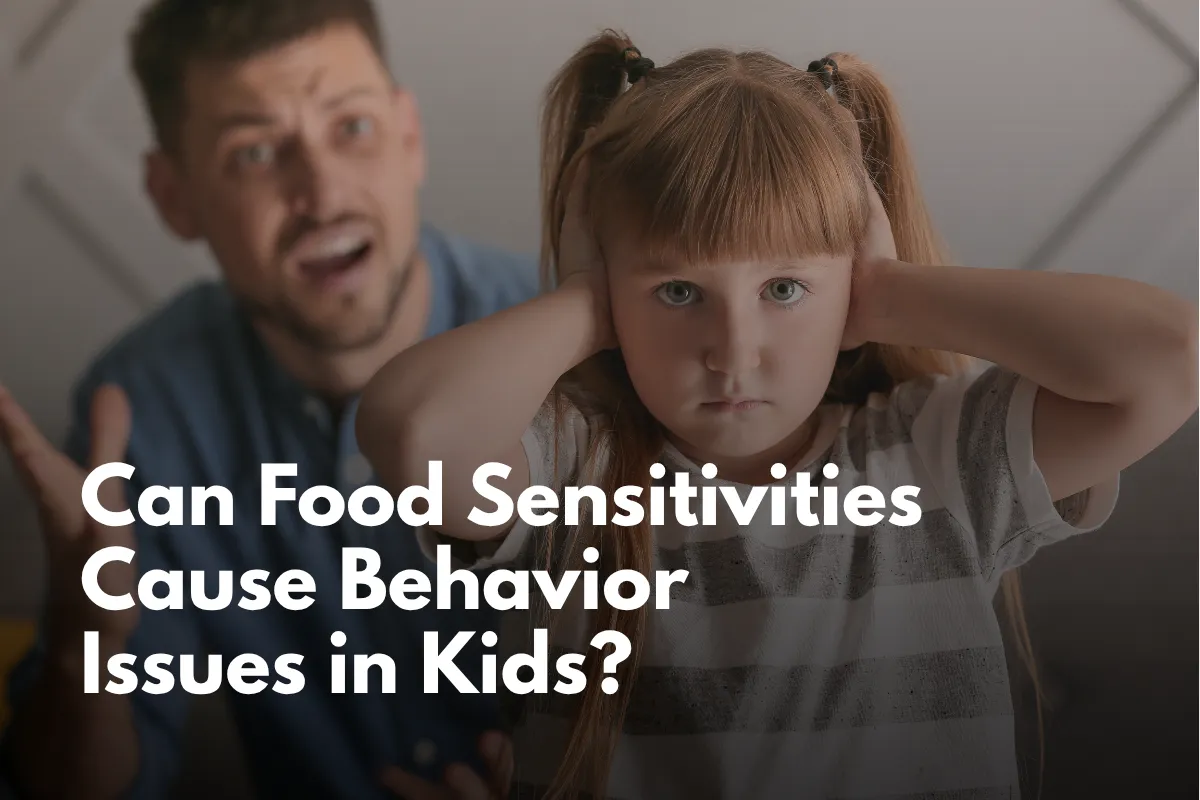
Can Food Sensitivities Cause Behavior Issues in Kids?
If your child’s behavior feels unpredictable at times, with big emotions, trouble focusing, or sudden meltdowns, you’re not alone.
And for many moms, the hardest part is this:
Nothing seems to explain it.
But one piece that often gets overlooked?
👉 What’s happening in the body, especially the gut.
The Gut-Behavior Connection
The gut and brain are constantly communicating through what’s often called the gut-brain connection.
This communication happens through:
the nervous system
hormones
and chemical messengers that help regulate mood and focus
In fact, a large portion of the body’s serotonin (a chemical involved in mood) is produced in the gut.
So when the gut is irritated or out of balance, it doesn’t just affect digestion; it can also influence how your child feels and responds throughout the day.
This might look like:
increased irritability
difficulty focusing
emotional ups and downs
So instead of only showing up as physical symptoms, it can sometimes show up as behavior.
This doesn’t mean food is always the cause, but it can be one piece of the bigger picture.
How Food Sensitivities Can Play a Role
Food sensitivities don’t always cause immediate reactions.
👉 Learn more about the signs of food sensitivities in kids
Instead, they can create ongoing, low-level responses in the body, which may influence how your child feels throughout the day.
In some cases, this can contribute to:
irritability or short patience
difficulty focusing
emotional ups and downs
sudden meltdowns
hyperactivity or restlessness
One of the biggest challenges is that these reactions are often delayed, sometimes showing up hours or even days after eating a food.
So instead of a clear cause-and-effect, it can feel inconsistent or hard to trace.
Why This Often Gets Missed
Most parents are told to look at things like:
sugar intake
sleep
screen time
And while those matter, they don’t always explain everything.
With food sensitivities, reactions can be delayed, which makes them easy to overlook or disconnect from food entirely.
What to Look For
You might start to notice patterns like:
behavior shifts after certain meals or snacks
good days followed by more challenging ones
symptoms that seem to come and go without a clear reason
multiple symptoms happening at once (gut + mood + energy)
These patterns aren’t always obvious at first, but over time, they can start to tell a story.
If you’re starting to notice behavior patterns but can’t quite connect the dots…
👉 Not sure what’s causing it?
Take our Gut Health Quiz to help identify potential triggers and patterns.
It’s quick, simple, and a helpful first step.
What You Can Do Next
The goal isn’t to assume food is the problem, it’s to get clearer.
That might look like:
paying attention to patterns
observing behavior alongside food
or using tools that help highlight potential sensitivities
This helps take the guesswork out of it.
A Note for Moms
If your child’s behavior feels bigger than it should…
It’s worth looking a little deeper.
Not from a place of fear, but from a place of understanding.
If You Want Help Connecting the Dots
This is exactly what we help families do.
Through our testing and coaching programs, we help identify patterns and potential triggers, so you can better understand what your child’s body may be responding to.
This content is for educational purposes only and is not intended to diagnose or treat any condition. Always consult with your healthcare provider for medical concerns.